
Medically reviewed by David B. Samadi, MD | Last Reviewed: June 2026 | Last Updated: June 2026
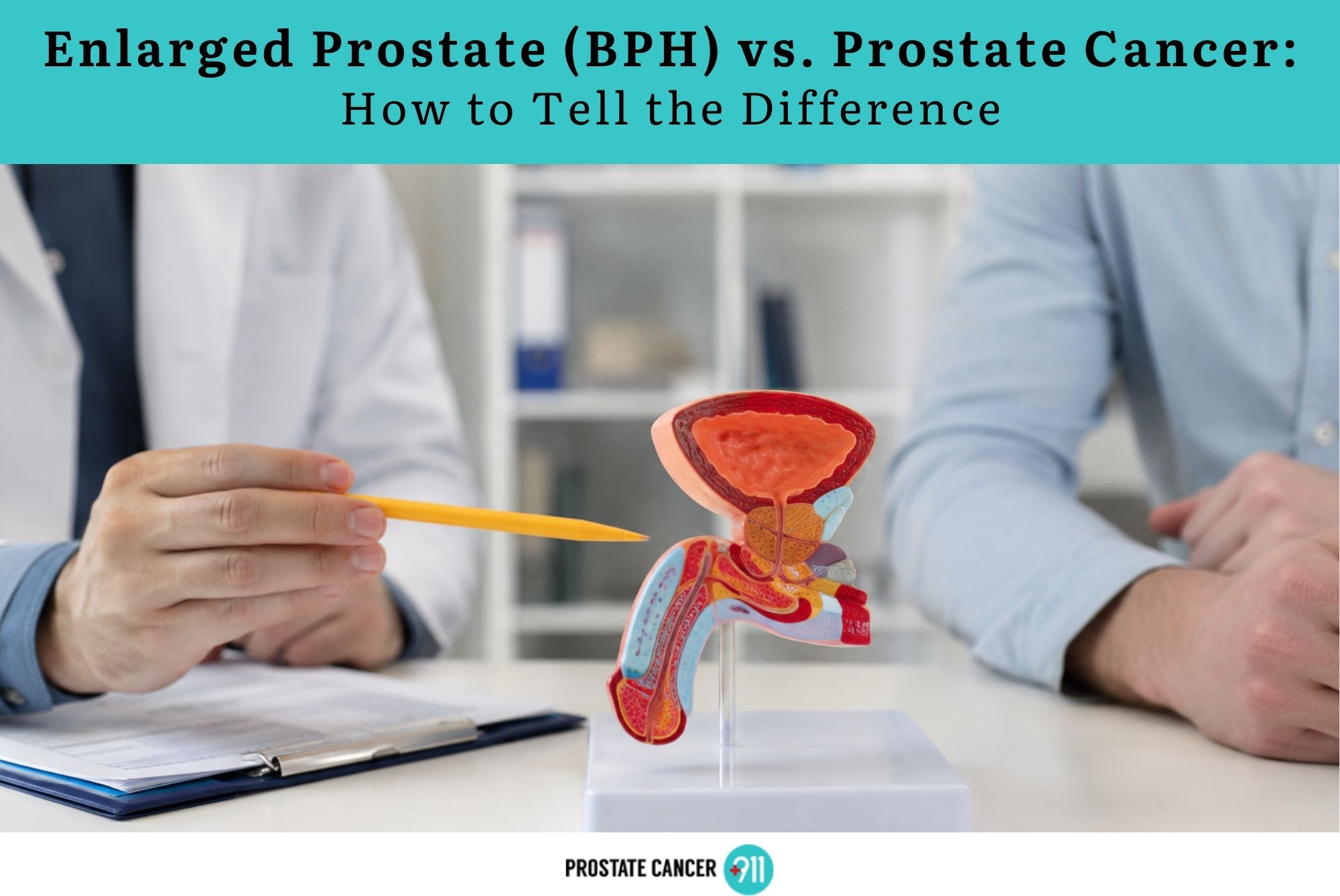 As men get older, changes in prostate health become increasingly common. Two of the most frequently discussed prostate conditions are Benign Prostatic Hyperplasia (BPH), commonly known as an enlarged prostate, and prostate cancer. While these conditions can produce similar urinary symptoms, they are fundamentally different in their causes, risks, diagnosis, and treatment.
Understanding the difference between enlarged prostate symptoms and signs of prostate cancer is critical for protecting your long-term health. At Prostate Cancer 911, our experienced specialists help patients navigate prostate concerns with advanced diagnostic testing, personalized treatment plans, and compassionate care.
What Is the Prostate?
The prostate is a walnut-sized gland located just below the bladder and in front of the rectum. It surrounds the urethra—the tube that carries urine from the bladder out of the body—and produces fluid that nourishes and transports sperm.
As men age, the prostate often changes in size and function. While some changes are harmless, others require prompt medical evaluation.
What Is Benign Prostatic Hyperplasia (BPH)?
Benign Prostatic Hyperplasia (BPH) is a non-cancerous enlargement of the prostate gland. It is one of the most common conditions affecting aging men.
As the prostate enlarges, it can compress the urethra, making it more difficult for urine to pass freely.
Common Enlarged Prostate Symptoms
Men with BPH often experience:
- Frequent urination
- Urinating more often at night (nocturia)
- Weak urine stream
- Difficulty starting urination
- Stopping and starting during urination
- Feeling that the bladder doesn’t completely empty
- Sudden urgency to urinate
- Dribbling after urination
Although these symptoms can significantly impact quality of life, BPH is not cancer and does not directly cause prostate cancer.
What Is Prostate Cancer?
Prostate cancer occurs when abnormal cells begin growing uncontrollably within the prostate gland. It is one of the most common cancers diagnosed in men.
Many cases grow slowly and remain confined to the prostate for years, while others can be aggressive and spread beyond the gland if not detected early.
Early detection dramatically improves treatment success and survival rates.
BPH vs Prostate Cancer: What’s the Difference?
Although both conditions affect the prostate, they differ significantly.
| Feature | Enlarged Prostate (BPH) | Prostate Cancer |
| Cancerous? | No | Yes |
| Life-threatening? | Rarely | Potentially |
| Common with age? | Yes | Yes |
| Causes urinary symptoms? | Frequently | Sometimes |
| Can spread to other organs? | No | Yes |
| Requires medical evaluation? | Yes | Yes |
The challenge is that both conditions may produce similar urinary symptoms, making professional evaluation essential.
Do BPH and Prostate Cancer Have Similar Symptoms?
Yes.
Both conditions may cause:
- Difficulty urinating
- Weak urine flow
- Frequent urination
- Urgency
- Waking up multiple times at night
- Incomplete bladder emptying
Because symptoms overlap, it is impossible to determine the cause based solely on how you feel.
Symptoms More Suggestive of Prostate Cancer
Many men with early prostate cancer have no symptoms at all, which is why routine screening is so important.
As prostate cancer progresses, symptoms may include:
- Blood in the urine
- Blood in the semen
- Erectile dysfunction
- Painful ejaculation
- Persistent pelvic discomfort
- Lower back pain
- Hip pain
- Bone pain
- Unexplained weight loss
- Fatigue
These symptoms should never be ignored and warrant immediate medical evaluation.
What Causes BPH?
Doctors do not know one exact cause, but several factors contribute:
- Aging
- Hormonal changes
- Increased dihydrotestosterone (DHT)
- Family history
- Obesity
- Diabetes
- Heart disease
- Lack of exercise
BPH affects approximately half of men over age 50 and becomes increasingly common with age.
Risk Factors for Prostate Cancer
Several factors increase the likelihood of developing prostate cancer.
These include:
- Age over 50
- African American ethnicity
- Family history
- BRCA1 or BRCA2 gene mutations
- Obesity
- Diet high in processed foods and saturated fats
- Smoking
- Exposure to certain environmental toxins
Men with increased risk should discuss earlier screening with their healthcare provider.
How Doctors Diagnose BPH vs Prostate Cancer
Accurate diagnosis often requires several tests.
PSA Blood Test
The Prostate-Specific Antigen (PSA) blood test measures PSA levels in the bloodstream.
Elevated PSA may result from:
- BPH
- Prostate cancer
- Prostatitis
- Urinary tract infections
- Recent ejaculation
- Recent catheterization
An elevated PSA alone does not diagnose cancer.
Digital Rectal Exam (DRE)
During a DRE, the physician gently examines the prostate through the rectum to detect:
- Enlargement
- Nodules
- Hard areas
- Irregularities
MRI of the Prostate
Advanced multiparametric MRI provides detailed images that help identify suspicious areas before biopsy.
Prostate Biopsy
If cancer is suspected, a biopsy removes small tissue samples for microscopic examination.
Only a biopsy can definitively diagnose prostate cancer.
Treatment Options for Enlarged Prostate (BPH)
Treatment depends on symptom severity.
Lifestyle Changes
Many men improve symptoms by:
- Limiting evening fluids
- Reducing caffeine
- Reducing alcohol
- Maintaining a healthy weight
- Regular exercise
- Bladder training
Medications
Common medications include:
- Alpha-blockers
- 5-alpha reductase inhibitors
- Combination therapy
Minimally Invasive Procedures
When medications aren’t enough, options include:
- UroLift®
- Rezūm™ Water Vapor Therapy
- Aquablation®
- Laser therapy
Surgery
Severe BPH may require procedures such as:
- TURP (Transurethral Resection of the Prostate)
- HoLEP (Holmium Laser Enucleation)
Treatment Options for Prostate Cancer
Treatment depends on:
- Cancer stage
- PSA level
- Gleason score
- MRI findings
- Overall health
- Patient preferences
Common treatment options include:
Active Surveillance
Many low-risk cancers are monitored carefully without immediate treatment.
Surgery
Radical prostatectomy removes the prostate gland.
Radiation Therapy
Options include:
- External beam radiation
- Proton therapy
- Brachytherapy
Hormone Therapy
Hormone therapy lowers testosterone levels to slow cancer growth.
Chemotherapy
Used primarily for advanced or metastatic prostate cancer.
Targeted Therapy & Immunotherapy
Newer treatments continue to improve outcomes for select patients.
Can You Have Both BPH and Prostate Cancer?
Yes.
Many men have both conditions simultaneously.
Because BPH becomes common with age, its presence does not eliminate the possibility of prostate cancer.
This is why proper screening and ongoing evaluation remain essential.
When Should You See a Prostate Specialist?
Schedule an evaluation if you experience:
- Persistent urinary symptoms
- Elevated PSA
- Blood in urine
- Blood in semen
- Family history of prostate cancer
- Pelvic pain
- Difficulty emptying your bladder
- Sudden changes in urination
Early diagnosis leads to more treatment options and better outcomes.
Protecting Your Prostate Health
Maintaining good prostate health includes:
- Regular PSA screening
- Routine medical examinations
- Healthy diet rich in vegetables and fruits
- Regular physical activity
- Maintaining a healthy weight
- Avoiding tobacco
- Limiting excessive alcohol consumption
- Managing diabetes and heart disease
Why Choose Prostate Cancer 911?
At Prostate Cancer 911, patients receive comprehensive prostate evaluations using advanced diagnostic technology and evidence-based treatment recommendations.
Our team is committed to helping every patient understand their diagnosis, explore treatment options, and make informed decisions with confidence.
Whether you’re experiencing enlarged prostate symptoms, have elevated PSA levels, or need a second opinion regarding prostate cancer, our specialists provide personalized care focused on achieving the best possible outcomes.
Frequently Asked Questions (Q&A)
Is an enlarged prostate the same as prostate cancer?
No. BPH is a non-cancerous enlargement of the prostate, while prostate cancer involves abnormal malignant cell growth.
Can BPH turn into prostate cancer?
No. BPH does not become prostate cancer, although both conditions may occur at the same time.
Can prostate cancer exist without symptoms?
Yes. Early-stage prostate cancer often causes no noticeable symptoms.
Does a high PSA always mean cancer?
No. Elevated PSA can result from BPH, infection, inflammation, or other non-cancerous conditions.
What age should men begin prostate screening?
Most men should discuss screening around age 50. Men at higher risk may benefit from starting between ages 40 and 45.
Can BPH cause erectile dysfunction?
BPH itself may contribute to sexual symptoms, and some medications used to treat BPH can also affect sexual function.
How is prostate cancer confirmed?
Only a prostate biopsy can definitively diagnose prostate cancer.
Can lifestyle changes improve BPH symptoms?
Yes. Weight management, exercise, reducing caffeine, limiting alcohol, and avoiding fluids before bedtime often help.
What is the most accurate test for prostate cancer?
Diagnosis typically combines PSA testing, digital rectal examination, MRI imaging, and biopsy when indicated.
Should I worry about urinary symptoms?
Any persistent urinary symptoms deserve evaluation. While many are caused by BPH, only a healthcare provider can determine whether prostate cancer or another condition is present.
Contact Prostate Cancer 911
Prostate Cancer 911
485 Madison Ave #21st
New York, NY 10022
Phone: (212) 365-5000
Website: https://prostatecancer911.com
Request An Appointment: https://prostatecancer911.com/appointments/