
Medically reviewed by David B. Samadi, MD | Last Reviewed: June 2026 | Last Updated: June 2026
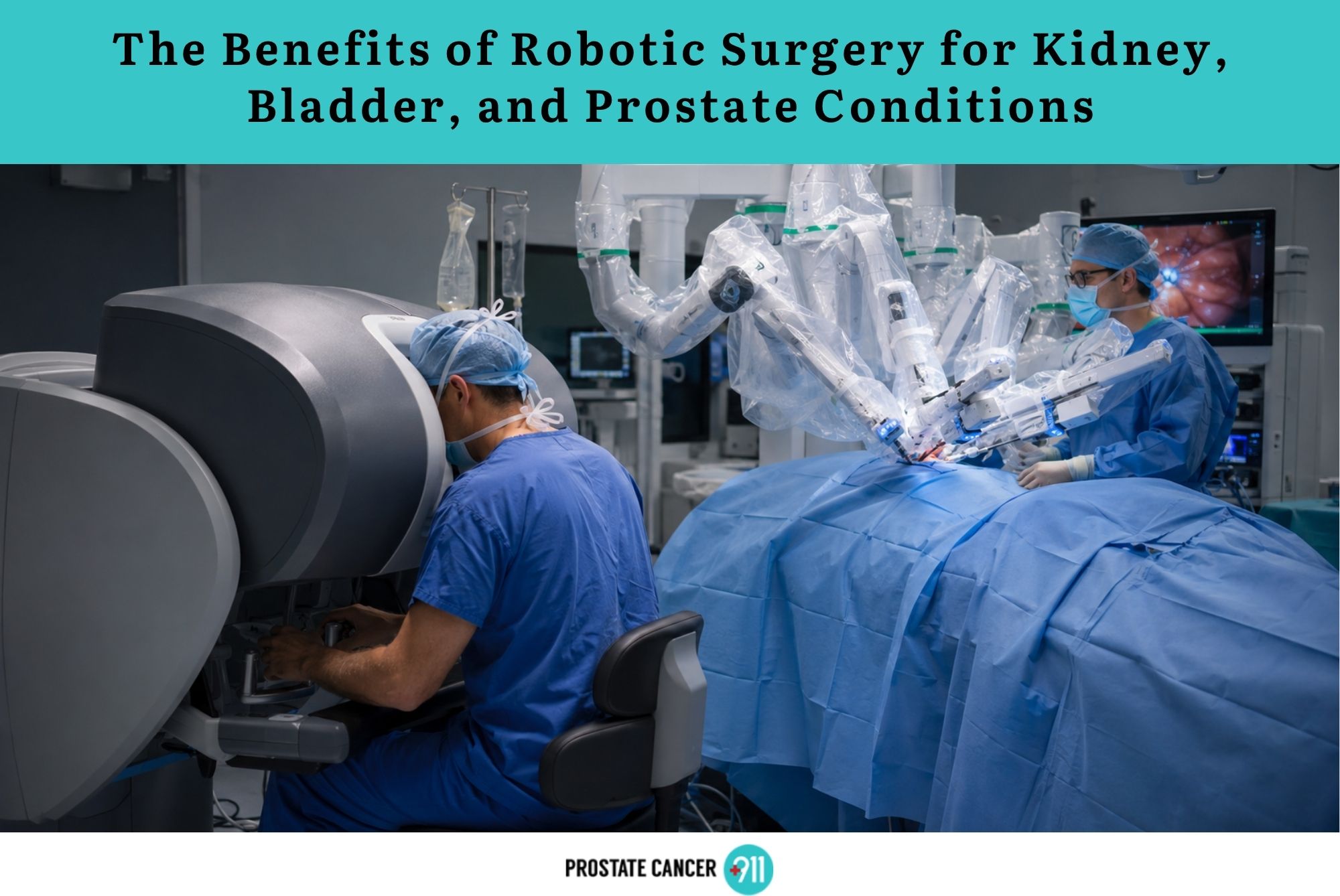 Robotic-assisted surgery has transformed the field of urology, offering patients a highly precise, minimally invasive approach to treating a wide range of conditions affecting the kidneys, bladder, and prostate. While many people associate robotic surgery with prostate cancer treatment, today’s advanced robotic technology is also used to treat kidney cancer, bladder cancer, kidney obstruction, enlarged prostate (BPH), and other complex urologic conditions.
At Prostate Cancer 911, our goal is to ensure patients understand every available treatment option so they can make informed decisions about their care. Robotic urologic surgery has become one of the most significant advances in modern medicine because it combines exceptional surgical precision with faster recovery times and outstanding clinical outcomes.
If you or a loved one has been diagnosed with a prostate, kidney, or bladder condition that may require surgery, understanding the benefits of robotic-assisted procedures can help you feel more confident about your treatment journey.
What Is Robotic Urologic Surgery?
Despite the name, robotic surgery is not performed by a robot acting independently. Instead, your experienced urologic surgeon controls sophisticated robotic instruments from a nearby console.
The robotic system translates the surgeon’s hand movements into tiny, highly controlled movements using miniature surgical instruments inserted through several very small incisions.
The technology provides:
- High-definition 3D magnified visualization
- Tremor elimination
- Greater dexterity than the human wrist
- Improved precision around delicate nerves and blood vessels
- Better access to difficult surgical areas
These advantages allow surgeons to perform highly complex procedures while minimizing trauma to surrounding tissues.
Conditions Commonly Treated with Robotic Surgery
Robotic-assisted surgery has expanded far beyond prostate cancer.
Common urologic procedures include:
Robotic Prostatectomy
One of the most common robotic urologic surgeries is radical prostatectomy for prostate cancer.
Benefits include:
- Excellent cancer control
- Greater preservation of urinary continence
- Improved nerve-sparing techniques
- Better chances of preserving erectile function when appropriate
- Smaller incisions
- Reduced blood loss
Partial Nephrectomy (Kidney Cancer)
When kidney tumors are discovered early, surgeons can often remove only the tumor while preserving healthy kidney tissue.
Robotic surgery allows for:
- Greater surgical precision
- Maximum preservation of kidney function
- Less blood loss
- Faster recovery
- Reduced hospital stays
Saving healthy kidney tissue is especially important for patients with diabetes, hypertension, or reduced kidney function.
Radical Nephrectomy
For larger kidney tumors, complete kidney removal may be necessary.
Robotic surgery offers:
- Smaller incisions
- Less postoperative discomfort
- Shorter hospitalization
- Faster return to normal activities
Robotic Bladder Surgery
Patients with bladder cancer may require partial or complete bladder removal.
Robotic techniques can improve:
- Surgical precision
- Lymph node removal
- Recovery times
- Blood loss
- Overall postoperative comfort
Pyeloplasty
Pyeloplasty treats ureteropelvic junction (UPJ) obstruction, where urine cannot properly drain from the kidney.
Robotic repair allows surgeons to reconstruct the urinary tract with exceptional precision while preserving kidney function.
Adrenal Surgery
Robotic techniques are also used to remove adrenal tumors through minimally invasive approaches.
Ureteral Reconstruction
Patients with ureteral strictures, injuries, or scarring may benefit from robotic reconstruction that restores normal urine flow while avoiding larger open incisions.
Advantages of Robotic Surgery Compared to Traditional Open Surgery
One of the biggest reasons robotic surgery has become the preferred option for many urologic procedures is the numerous advantages it offers patients.
Smaller Incisions
Traditional open surgery often requires a large abdominal incision.
Robotic surgery usually involves several tiny incisions, resulting in:
- Less tissue damage
- Smaller scars
- Improved cosmetic outcomes
Less Blood Loss
Because robotic instruments are incredibly precise, surgeons can avoid unnecessary injury to surrounding tissues and blood vessels.
Many patients require little or no blood transfusion.
Less Pain After Surgery
Smaller incisions generally result in:
- Less postoperative pain
- Reduced need for narcotic medications
- Improved comfort during recovery
Faster Recovery
Many patients experience:
- Earlier walking
- Faster return home
- Quicker healing
- Earlier return to work
- Resumption of normal activities within weeks rather than months
Shorter Hospital Stay
Many robotic procedures require only:
- Overnight hospitalization
- Same-day discharge for selected procedures
This significantly reduces disruption to patients’ daily lives.
Lower Risk of Infection
Smaller incisions decrease the chance of:
- Surgical site infections
- Wound complications
- Hernias
Greater Surgical Precision
The robotic system offers:
- Motion scaling
- Tremor filtration
- Enhanced visualization
- Improved access to confined anatomical spaces
This precision is particularly important when operating near delicate nerves responsible for urinary control and sexual function.
Why Robotic Surgery Is Especially Valuable for Prostate Cancer
The prostate sits deep within the pelvis and is surrounded by critical structures.
Nearby are:
- Bladder
- Rectum
- Urinary sphincter
- Erectile nerves
- Major blood vessels
Robotic visualization allows surgeons to identify these structures more clearly than with traditional techniques.
The result may include:
- Better preservation of continence
- Improved nerve-sparing
- Reduced complications
- Excellent cancer removal
Is Robotic Surgery Appropriate for Every Patient?
Not every patient requires robotic surgery.
Treatment recommendations depend upon:
- Cancer stage
- Tumor location
- Overall health
- Previous surgeries
- Body habitus
- Kidney function
- Other medical conditions
Some patients may instead benefit from:
- Active surveillance
- Radiation therapy
- Medical management
- Endoscopic procedures
- Traditional surgery
Every treatment plan should be individualized.
Recovery After Robotic Urologic Surgery
Recovery varies depending on the procedure performed.
Most patients experience:
First Few Days
- Mild soreness
- Walking the day of surgery
- Minimal blood loss
- Early diet advancement
First Few Weeks
- Gradual return to normal activity
- Follow-up appointments
- Monitoring incision healing
- Increasing energy levels
Long-Term Recovery
Your care team will monitor:
- Urinary function
- Kidney function
- Cancer surveillance
- PSA levels (when appropriate)
- Overall recovery
Following postoperative instructions carefully helps maximize healing.
Choosing an Experienced Robotic Urologic Surgeon Matters
Technology is only one part of successful surgical outcomes.
The surgeon’s experience remains one of the most important factors affecting:
- Cancer control
- Complication rates
- Recovery
- Functional outcomes
- Long-term success
Patients should feel comfortable discussing:
- Surgical experience
- Procedure volume
- Expected outcomes
- Potential risks
- Alternative treatment options
The Future of Robotic Urology
Robotic technology continues to evolve with advances including:
- Enhanced imaging
- Artificial intelligence-assisted planning
- Improved instrumentation
- Better visualization
- Greater precision
- Expanded minimally invasive procedures
As technology improves, even more patients may benefit from robotic surgical approaches.
When Should You See a Urologic Specialist?
Schedule an evaluation if you experience:
- Elevated PSA
- Blood in the urine
- Kidney masses
- Bladder tumors
- Recurrent urinary tract infections
- Urinary obstruction
- Kidney obstruction
- Difficulty urinating
- Enlarged prostate symptoms
- A new diagnosis of prostate, kidney, or bladder cancer
Early evaluation often leads to more treatment options and better outcomes.
Frequently Asked Questions (Q&A)
What is robotic urologic surgery?
Robotic urologic surgery is a minimally invasive surgical technique in which a specially trained surgeon controls robotic instruments to perform highly precise procedures on the prostate, kidneys, bladder, or urinary tract.
Is robotic surgery actually performed by a robot?
No. The surgeon is in complete control throughout the procedure. The robotic system translates the surgeon’s movements into precise instrument movements.
What conditions can robotic surgery treat?
Robotic surgery is commonly used for prostate cancer, kidney cancer, bladder cancer, enlarged prostate (BPH), kidney obstruction, adrenal tumors, ureteral reconstruction, and other complex urologic conditions.
Is robotic surgery safer than open surgery?
For many patients, robotic surgery offers advantages such as smaller incisions, reduced blood loss, less pain, shorter hospital stays, and faster recovery. However, the safest approach depends on your specific medical condition.
Will robotic surgery leave large scars?
No. Most robotic procedures use several very small incisions, which typically heal with minimal scarring.
How long does recovery take?
Recovery varies by procedure, but many patients return to normal daily activities within several weeks—often sooner than with traditional open surgery.
Does robotic prostate surgery improve urinary control?
Robotic surgery allows for excellent visualization and precision, which may help preserve urinary continence. Outcomes depend on the patient’s anatomy, cancer stage, and surgeon experience.
Can robotic surgery preserve sexual function?
When medically appropriate, nerve-sparing robotic techniques may improve the chances of preserving erectile function after prostate surgery. Individual results vary.
Who is a candidate for robotic surgery?
Candidates are determined after a thorough evaluation that considers the patient’s diagnosis, overall health, medical history, and treatment goals.
Why is surgeon experience so important?
Robotic technology is a powerful tool, but successful outcomes depend largely on the expertise, training, and experience of the surgeon performing the procedure.
Take the Next Step Toward Advanced Urologic Care
Robotic-assisted surgery has transformed the treatment of many kidney, bladder, and prostate conditions by offering exceptional precision, smaller incisions, faster recovery, and excellent clinical outcomes. If you have been diagnosed with a urologic condition that may require surgery, understanding your options is the first step toward receiving personalized, high-quality care.
At Prostate Cancer 911, we are committed to helping patients navigate every stage of diagnosis and treatment with expert guidance and compassionate support. Whether you are seeking a second opinion or exploring minimally invasive surgical options, our team is here to help you make informed decisions about your health.
Contact Prostate Cancer 911
Prostate Cancer 911
485 Madison Ave #21st
New York, NY 10022
Phone: (212) 365-5000
Website: https://prostatecancer911.com
Request an Appointment: https://prostatecancer911.com/appointments/