Cancer control
The first goal is complete removal of the cancer, with clear margins and a plan for PSA follow-up after surgery.

ROBOTIC PROSTATECTOMY · MIDTOWN MANHATTAN
One of the most experienced robotic prostate surgeons in the country.
Dr. David Samadi's SMART robotic technique is built around three goals: remove the cancer, protect urinary control, and preserve sexual function. Speak with his team this week about whether surgery is right for you.
✓ 10,000+ robotic prostate surgeries performed✓ Virtual consultations available for patients outside New York
Please use this form for general information purposes only. DO NOT send personal health information through this form. Specific patient care must be addressed during your appointment.
"*" indicates required fields
UNDERSTANDING PROSTATE CANCER SURGERY
When considering prostate cancer surgery, it’s natural to focus on removing the cancer. But what happens afterward matters, too. An experienced surgeon considers cancer control, urinary continence, and sexual function when planning your procedure.
The first goal is complete removal of the cancer, with clear margins and a plan for PSA follow-up after surgery.
Careful technique around the bladder neck and sphincter helps men regain bladder control sooner after surgery.
Sparing the delicate nerve bundles beside the prostate gives men the best chance of preserving erections.
The Samadi Modified Advanced Robotic Technique (SMART) is Dr. Samadi’s approach to robotic prostatectomy, developed in 2007. It is designed to remove the cancer with precision while working to preserve the nerves involved in erections and urinary continence, whenever medically appropriate.

A few small incisions instead of one large one, with less blood loss and a shorter hospital stay than open surgery.
The inside-out approach is built to protect the nerve bundles wherever the cancer allows.
The surgeon you meet at your consultation is the surgeon who operates.
From surgery day to returning to your daily routine.
SURGERY DAY
Little pain is expected. You’ll sit up and take your first steps the same day, which speeds healing.
DAY 1
Most men go home the morning after surgery, with a discreet leg-bag catheter worn under clothing.
DAYS 6–9
A quick office visit. Some leaking afterward is normal and usually improves over days to weeks.
WEEKS 2–3
Most men drive again after two weeks and return to work in two to three, depending on the job.
WEEKS 3–4
Incisions are fully healed. Jogging, cycling and weight lifting can usually resume.
Typical timeline. Your own recovery plan will be set by Dr. Samadi’s team.
Hear from patients about their experience, recovery, and quality of life after surgery.
“Dr. Samadi saved my life from an aggressive form of Prostate Cancer!”
“He is thorough, compassionate and communicates in a clear understandable way.”
MEET YOUR SURGEON
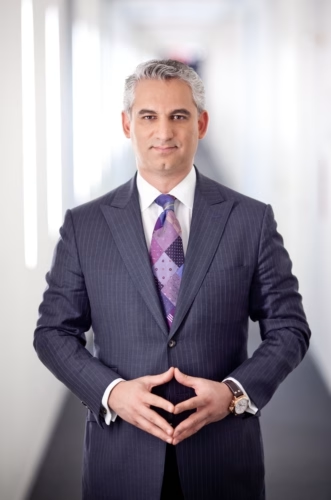
Board-Certified Urologist and Robotic Prostate Cancer Surgeon in NYC
Dr. David B. Samadi is a urologic oncologist and robotic surgeon trained in open, laparoscopic, and robotic prostate surgery. He completed his oncology fellowship at Memorial Sloan Kettering Cancer Center and trained in robotic prostatectomy in France under Professor Claude Abbou, a pioneer in robotic urologic surgery.
If you’ve recently been diagnosed with prostate cancer or want a second opinion before deciding on surgery, Dr. Samadi will review your PSA results, biopsy report, and imaging with you. He’ll explain your treatment options and whether robotic prostatectomy, a minimally invasive procedure to remove the prostate, may be appropriate for you. You’ll have time to ask about the benefits and risks of surgery, what to expect during recovery, and how treatment may affect urinary control and sexual function.
Request a Prostate Cancer Surgery Consultation or Second Opinion →485 Madison Avenue, 21st Floor, New York, NY 10022 · (212) 365-5000
YOUR NEXT STEPS
No obligation. Many men use the consultation to compare surgery with radiation or active surveillance before they decide.
A short call to understand where you are and what you’ve been told.
PSA history, biopsy pathology and MRI. We’ll tell you exactly what to send and how.
Review your Gleason score, stage and options in person at 485 Madison Avenue or by secure video visit.
If surgery is right for you, our team will coordinate your procedure and guide you through the next steps. Afterward, we’ll follow your recovery with post-operative visits and PSA checks.
SECOND OPINIONS
A second opinion before prostate surgery is common and wise. Dr. Samadi will review your pathology and imaging and give you a clear recommendation, whatever you decide.
FREQUENTLY ASKED QUESTIONS & LOCATION
Not always. Depending on your Gleason score, stage and PSA, active surveillance or radiation may make more sense. Dr. Samadi reviews every option with you, including when not to operate.
Most men go home the day after surgery with a catheter, which stays in for about six to nine days. You can walk and climb stairs right away, drive after about two weeks, and return to work in two to three weeks. Heavy exercise and lifting wait until weeks three to four, when the incisions have fully healed.
Protecting both is a core goal of the SMART technique. Recovery depends on your age, function before surgery and how close the cancer is to the nerves, and Dr. Samadi will talk through realistic expectations at your consultation.
Coverage for consultations and robotic prostate surgery depends on your insurance plan. Our team can review your benefits with you before your visit, so you know what to expect. To verify your specific plan, call Dr. Samadi’s office at (212) 365-5000.
Yes. Many patients travel from other states and countries. You can start with a virtual consultation, and we review your records in advance so any trip is planned around your surgery. [TRAVEL SUPPORT DETAILS]
REQUEST A CONSULTATION
Talk with Dr. Samadi’s team about your diagnosis, your options and what surgery would mean for you.
485 Madison Avenue, 21st Floor · New York, NY 10022 · [OFFICE HOURS]
We and the services embedded in this site — analytics, advertising, booking, maps and translation — collect information about your visit, including your IP address, your browser and the pages you view. Some of that information is shared with those companies. This happens as you browse. Read our Privacy policy.